


“Why can’t I just move on?” It’s one of the most common—and heartbreaking—questions I hear from clients living with PTSD and complex trauma.
Many people believe that healing is simply a matter of time or willpower. They tell themselves they should be over it by now. Friends or family may unintentionally reinforce this belief with comments like, “That happened years ago,” or “Just let it go.”
If you’ve ever felt this way, I want you to know something important:
There is nothing wrong with you. Your brain and nervous system are doing exactly what they were designed to do—protect you.
Understanding why trauma lingers is often the first step toward healing.
What Is PTSD?
Post-Traumatic Stress Disorder (PTSD) is not a sign of weakness. It is a natural response to experiences that overwhelmed your ability to cope.
When something terrifying or life-threatening happens, your brain shifts into survival mode. The thinking part of your brain becomes less active while the survival centers take over.
For many people, these reactions gradually settle as the brain processes the experience.
For others, the brain continues responding as though the danger is still happening—even years later.

This is why someone with PTSD may experience:
- Flashbacks
- Nightmares
- Anxiety or panic attacks
- Hypervigilance
- Difficulty trusting others
- Trouble sleeping
- Feeling emotionally numb
- Avoiding reminders of the event
The trauma may be over.
The nervous system simply hasn’t received the message that it’s safe now.
Single-Incident Trauma
Single-incident trauma results from one overwhelming event.
Examples include:
- Sexual assault
- Serious car accidents
- Natural disasters
- Military combat
- Medical emergencies
- Physical assault
- Witnessing violence
Although these experiences happened once, their impact can continue long afterward.
A single traumatic event can change how the brain stores memories and responds to future stress, making everyday situations feel unexpectedly threatening.
What Is Complex Trauma?
Not all trauma happens in one moment.
Complex trauma develops after repeated or ongoing experiences that overwhelm a person’s sense of safety.
Examples include:
- Childhood abuse
- Emotional neglect
- Domestic violence
- Repeated sexual abuse
- Human trafficking
- Growing up with addiction or unpredictable caregivers
- Chronic bullying
Instead of learning that the world is generally safe, children exposed to ongoing trauma often learn to stay on constant alert.
Over time, the nervous system adapts to survival.
What once helped protect you may later look like:
- Always expecting something bad to happen
- Difficulty relaxing
- Trouble trusting others
- People-pleasing
- Perfectionism
- Emotional shutdown
- Feeling responsible for everyone else’s emotions
These are not personality flaws.
They are survival strategies.
Why Childhood Trauma Can Affect Adult Life
Our earliest relationships teach us what to expect from the world.
When those relationships are nurturing and consistent, children develop a sense of safety.
When relationships are frightening, unpredictable, or emotionally unavailable, the brain develops differently.
Many adults who experienced childhood trauma struggle with:
- Setting healthy boundaries
- Feeling worthy of love
- Regulating emotions
- Chronic anxiety
- Relationship difficulties
- Shame
- Fear of abandonment
- Chronic stress
Often, they don’t even realize these patterns are connected to early experiences.
They simply believe,
“This is just who I am.”
Fortunately, healing can change these patterns.
Why Symptoms Persist with PTSD and Complex Trauma
One of the biggest myths about PTSD and complex trauma is that people choose to stay stuck.
Nothing could be further from the truth.
Trauma memories are often stored differently than ordinary memories.
Instead of becoming part of the past, they remain emotionally “unfinished.”
The brain continues scanning for danger because it believes protection is still necessary.

That’s why a smell, sound, location, or even a tone of voice can suddenly trigger:
- Panic
- Fear
- Emotional flooding
- Dissociation
- Physical tension
Your logical mind may know you’re safe.
Your nervous system hasn’t caught up yet.
Healing From PTSD and Complex Trauma Involves More Than Talking
Traditional talk therapy can be incredibly helpful, but for many trauma survivors, understanding what happened isn’t enough.
Trauma affects both the brain and the body.
Healing often includes helping the nervous system learn that the danger has passed.
Evidence-based approaches such as EMDR (Eye Movement Desensitization and Reprocessing), nervous system regulation, mindfulness, and other somatic therapies can help the brain process traumatic memories so they no longer feel like they are happening in the present.
As healing occurs, many people notice they begin to:
- Feel calmer
- Sleep better
- Experience fewer triggers
- Develop healthier relationships
- Trust themselves again
- Feel more present in daily life
Healing doesn’t erase the past.
It changes how your brain and body carry it.
There Is Hope
Whether your trauma came from a single event or years of difficult experiences, healing is possible.
Recovery doesn’t mean forgetting what happened.
It means reclaiming your sense of safety, reconnecting with yourself, and discovering that your past does not have to define your future.
If you’ve spent years believing you should be “over it,” perhaps it’s time to replace that question with a different one:
“What happened to my nervous system—and how can it heal?”
That shift alone can open the door to compassion, understanding, and lasting change.
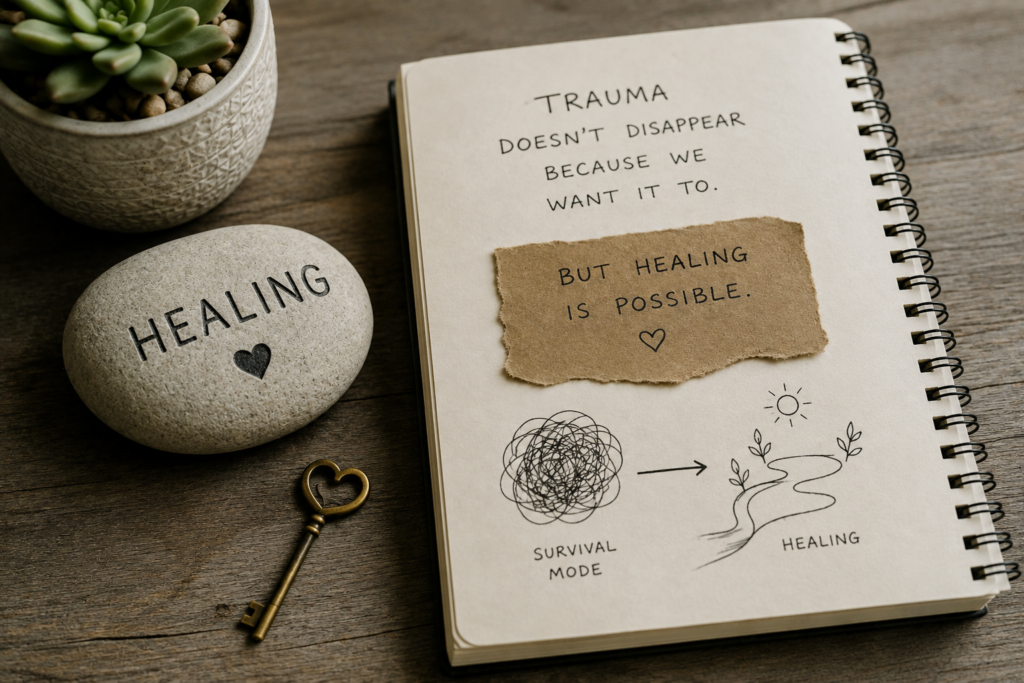
Ready to Begin Your Healing Journey?
If you’re struggling with PTSD, complex trauma, or the lasting effects of childhood trauma, you don’t have to navigate it alone.
Together, we can help your mind and nervous system move beyond survival and toward healing.
Schedule a free 15-minute consultation today to learn how trauma-informed therapy and EMDR may help you reconnect with hope, resilience, and the life you deserve.












+ show Comments
- Hide Comments
add a comment